
Tree Services
Tree Trimming & Pruning in Aurora, IL
Pruning is subtraction, and the cuts you cannot take back are the ones placed in the wrong spot. Good pruning removes a defined amount of wood for a defined reason — clearance over a roof, a weak fork in a young maple, deadwood hanging over a patio — and leaves the tree able to close the wound it was given.
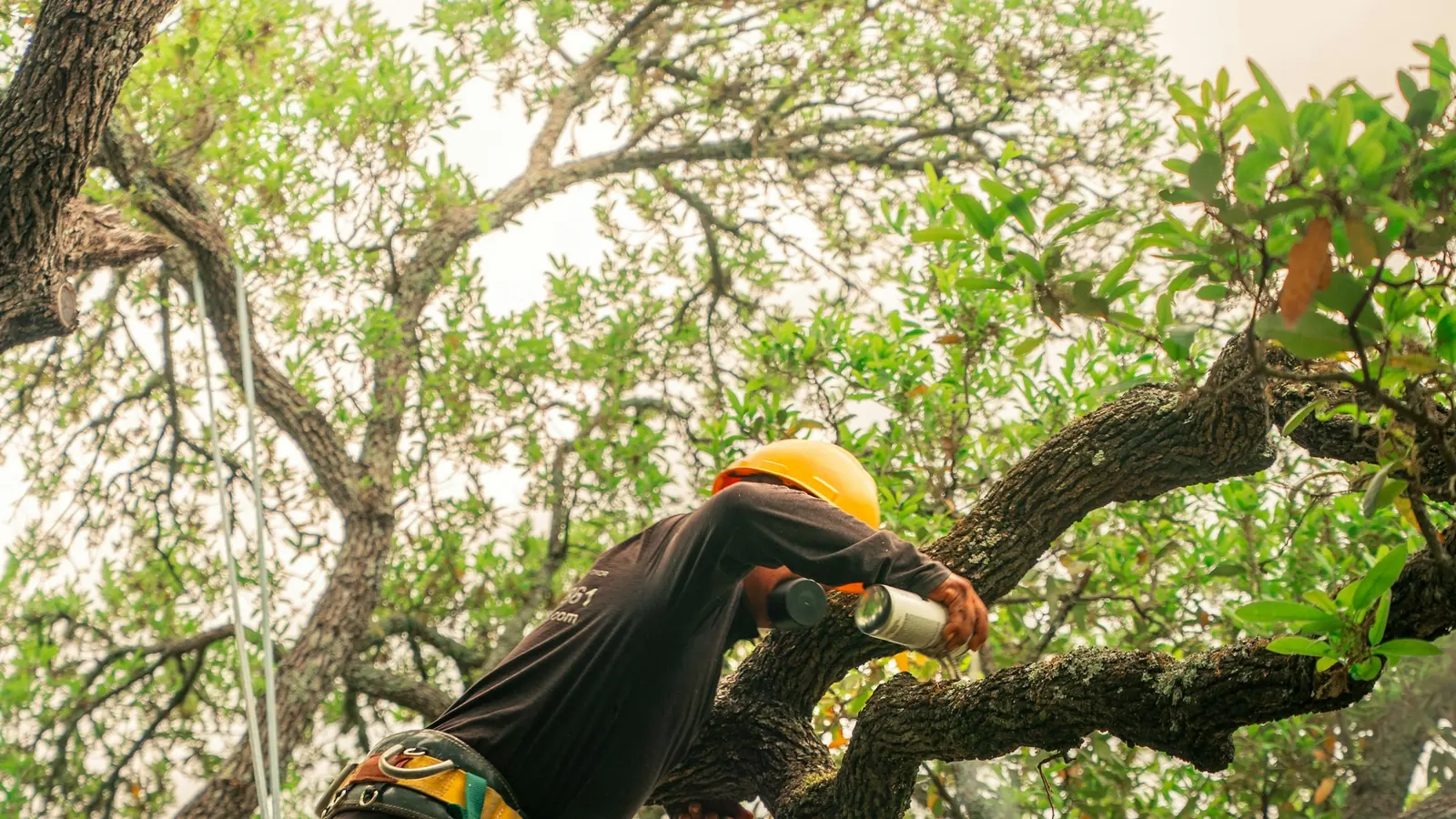
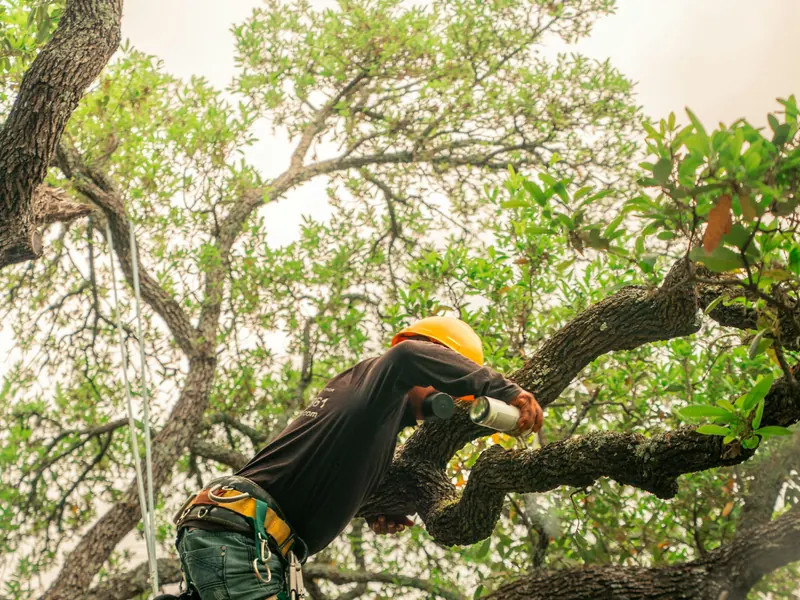
Lux Landscaping Construction prunes from a rope-and-harness climb or from the ground, using hand saws, pole saws and chainsaws depending on the tree and the access. We cut just outside the branch collar, size each cut to the limb it is taking, and work species by species so that the timing suits the tree in your yard. On a tree you intend to keep, we climb on rope rather than spikes.
Who this is for
- Branches resting on a roof, scraping gutters, or rubbing siding and chimneys
- Low limbs over a driveway, sidewalk, patio or parking pad
- Deadwood sitting above a deck, play set, walkway or seating area
- Young and mid-age trees with a weak fork or competing leaders that should be corrected before the limbs get heavy
Scope
What the work covers
- Clearance pruning to lift the canopy off roofs, gutters, drives, walks and fence lines
- Crown cleaning: dead, broken, hanging, rubbing and stubbed limbs taken out
- Structural pruning on younger trees to establish a single leader and a sound branch spacing
- Crown raising for headroom and selective reduction at the branch ends, cut back to a suitable lateral
- Storm-torn limbs and old stubs cut back to a proper collar cut so the wound can close
- Water sprouts and suckers cleared from the base and along the trunk
- Brush chipped, lawn raked, hard surfaces blown off, and chips left for mulch if you want them
Options
What you can choose
Clearance pruning
The most common request, and usually the simplest to scope. We take the canopy back off the structure it is touching and leave enough gap that it does not return in a season. Roof and gutter clearance, driveway and sidewalk headroom, and fence lines are all handled with the same approach: remove the limb at a union, do not stub it mid-length.
Crown cleaning and deadwood
Deadwood is the part of a tree most likely to come down on its own, and it is also the part that can be removed without any cost to the tree's health. Crown cleaning takes out dead, broken, hanging and badly crossing limbs and leaves the live structure alone. On a large shade tree over a patio, this is often all that is actually needed.
Structural pruning on young trees
The cheapest pruning you will ever buy is the pruning done while the limbs are still small. We subordinate competing leaders, open up tight included-bark unions, and set branch spacing so the tree grows into a shape that does not need large cuts later. A few small cuts now avoid a six-inch wound in fifteen years.
Reduction, not topping
We do not top trees. Cutting a canopy off at an arbitrary height leaves large open wounds and a mass of weakly attached regrowth, and the tree ends up taller, denser and more dangerous than before. Where height or spread genuinely has to come in, we reduce the ends back to suitable lateral branches, over more than one visit if that is what it takes. We also avoid flush cuts, which remove the collar the tree needs to seal the wound, and lion-tailing, which strips interior growth and leaves all the weight at the branch tips.
How we do it
The sequence on site
Walk the tree and agree the scope
We stand under the tree with you and point at specific limbs. Vague scopes produce disappointing pruning, so the estimate says what is being lifted, cleaned or reduced on each tree rather than just naming a service.
Set the timing to the species
Most shade trees are best pruned dormant. Oaks are held off through the oak wilt risk window, elms likewise, and spring-flowering trees wait until after they bloom. If the work is urgent — a broken limb over a walk — safety wins and we say so.
Set up and protect the ground
Climbing line installed, drop zone marked, and anything underneath either moved or covered. Furniture, planters and vehicles come out from under the canopy before the first cut.
Make the cuts
Cuts are placed just outside the branch collar, never flush to the trunk and never a stub. Large limbs are stepped down in pieces or lowered on rope. We keep the amount of live wood removed in a single season modest, because a tree that loses too much canopy at once responds with sprout growth rather than good structure.
Clean up and walk the site
Brush chipped, lawn raked, gutters and drive cleared of debris. Then we walk it with you from the ground, because pruning looks different from below than it does from the canopy.
Local conditions
What northern Illinois changes about this job
Oak wilt and the April-to-July window
Oak wilt is spread in part by beetles drawn to fresh cuts, and the high-risk period in northern Illinois runs roughly from April through early July. We do not make non-emergency cuts on oaks during that window. Late fall and winter are the safe seasons, and that is when most oak pruning around Aurora should be scheduled. Elms carry a comparable beetle-driven risk and get the same treatment.
Dormant pruning gives the clearest view
With the leaves off, the structure of a tree is visible: the weak unions, the crossing limbs, the deadwood that disappears into summer foliage. Winter work is usually faster, cleaner on the lawn when the ground is firm, and more accurate, which is why we book a lot of pruning for the cold months.
Parkway trees and street clearance
If the tree you want pruned is in the strip between the sidewalk and the street, it is probably the town's tree. Many municipalities in the area prune their own parkway trees on a cycle and do not permit outside crews to work on them. We check first, and if it is a village tree we will tell you who to call instead of quoting it.
FAQ
Tree Trimming & Pruning questions
Can you cut the top off to make the tree shorter?
We do not top trees. Topping leaves large wounds that do not close and triggers dense, weakly attached regrowth, so the tree becomes heavier and less predictable than it was. If height or spread has to come in, we reduce selected limbs back to suitable laterals, which keeps a natural outline. If a tree is simply too big for its spot, removal is the more honest answer and we will say so.
When should my oak be pruned?
Late fall or winter. Fresh cuts made during the oak wilt risk window, roughly April through early July in northern Illinois, attract the beetles that can carry the pathogen between trees. The exception is a broken or hazardous limb, which gets dealt with when it needs dealing with rather than waiting for a season.
How much can you take off in one visit?
Less than most people expect. Deadwood can come out freely because it is already gone, but live canopy is how the tree feeds itself, so we keep live removal conservative on mature trees and spread larger reductions over more than one season. If a quote promises to take a third of a mature tree's canopy at once, that is a reason for concern, not value.
Do you use spikes to climb?
Not on a tree that is staying. Spikes puncture the bark at every step and those wounds do not heal, so we climb on rope and harness instead. Spikes have a place on a removal, where the trunk is coming down anyway.
What happens to the brush and the chips?
Brush goes through the chipper and leaves with us by default. If you want the chips for mulch beds or paths, tell us at the walkthrough and we will leave a pile where you want it. Larger wood can be cut into rounds and stacked rather than hauled.
Free estimate
Ask about tree trimming & pruning
Send the address and a short description. We will arrange a time to walk the site, then put the scope and the price in writing.