
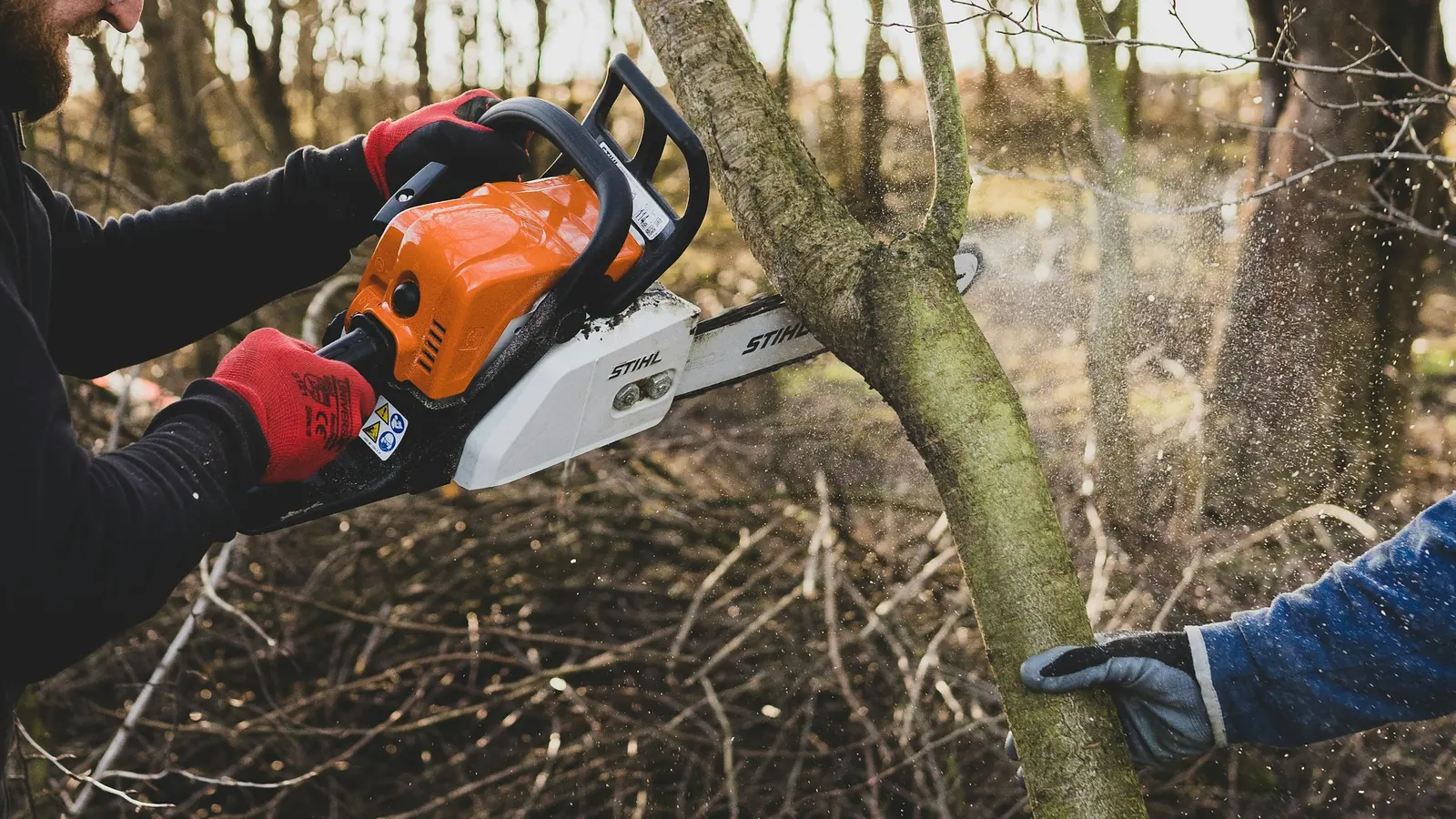
Tree Services
Hazardous Tree Mitigation in Aurora, IL
Storm work here has a pattern. Straight-line winds through a summer thunderstorm snap limbs at weak unions and fail whole trees that were leaning already. Wet snow and ice load the outer third of long limbs until they come apart. Spring and summer thunderstorms do most of the damage, and the trees that fail are rarely the ones nobody worried about.
The dangerous part of storm damage is usually not what hit the ground. It is the limb hanging in the canopy, the stub still under tension, the split union holding by a hinge of bark, and the root plate that lifted on one side and is now the only thing keeping a trunk upright. Lux Landscaping Construction takes those apart in a planned order, starting with whatever is loaded, and comes back to the brush afterward.
Who this is for
- A limb broken but still hung up in the canopy over a drive, roof or walkway
- A tree leaning after a storm, with soil heaved or cracked on one side of the base
- Standing dead ash that has gone brittle and needs to come down before it comes apart
- A trunk or heavy limb down across a driveway, fence, shed or back yard
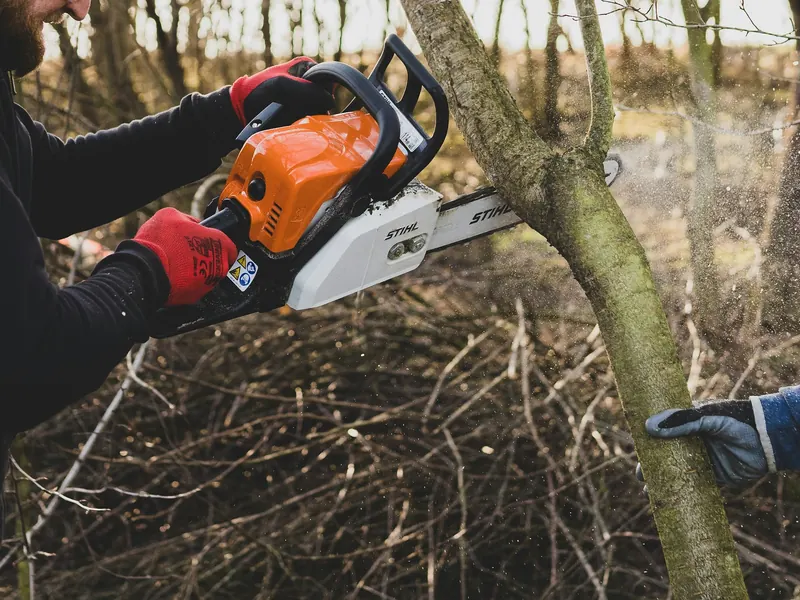
Scope
What the work covers
- Hanging, broken and partly detached limbs brought down under control
- Torn stubs and split unions cut back to a sound cut so the wound can close
- Leaning trees and lifted root plates taken down rather than propped
- Trees and limbs resting on fences, sheds, garages, decks and paving removed in pieces
- Brittle dead ash rigged or taken from outside the canopy instead of climbed
- A make-safe first pass where a drive or entry has to be usable before the site can be tidy
- Brush chipped, trunk wood cut into rounds, and the site raked and blown off
Options
What you can choose
Make safe now, finish later
Common after a widespread storm. The first visit deals with what is loaded and in the way: the hanger over the driveway comes down, the limb across the walk is cut clear, the trunk blocking the garage is sectioned and moved. Brush and rounds are stacked out of the way and we return for the full cleanup when the schedule allows. It gets your property usable first.
Full clear in one visit
Where the damage is contained and the access is good, the whole job gets done at once: hangers down, stubs cut back, wood cleared, site raked. This is the normal approach for a single failed limb or one tree down in an open yard.
Standing dead ash removal
Dead ash do not wait for a storm, and every season they stand they get harder to handle. These come down from outside the canopy or with equipment, with the drop zone kept clear, because brittle wood breaks without the flex and warning a green tree gives. If you have ash that have been dead a while, dealing with them is planned work rather than emergency work, and it is far cheaper done on a calm day.
Leaning tree: your decision, our execution
We do not assess tree health or issue risk evaluations, so we will not tell you a leaning tree is safe to keep. What we can do is describe plainly what we see from the ground and take it down if that is what you want. If you need a formal opinion — for an insurance file, a permit application, or a dispute with a neighbor — that is work for an independent certified arborist or, for a parkway tree, the municipal forestry department.
How we do it
The sequence on site
Call and describe it
Tell us what failed, what it is resting on, and whether anything is blocked or under it. Photos from a safe distance help. Storm damage is scheduled as quickly as we can get to it, and we will tell you honestly where you sit rather than naming a time we cannot hold.
Keep clear until we arrive
Stay out from under a hanging limb and keep cars, kids and pets away from it. Do not pull on anything and do not cut a limb that is bent under load, because stored tension moves wood fast. If a wire is involved, call the utility. If a tree is blocking a public street or touching a road, call the municipality or 911.
Walkthrough and a make-safe plan
On site we identify what is loaded, what is holding what, and the order that releases it safely. That order is the plan: hangers and tensioned wood first, then whatever is bearing weight on a structure, then everything that is simply lying on the ground.
Take the loaded wood down in that order
Hangers are roped and lowered rather than shaken loose. Limbs resting on a fence or roof are cut into pieces light enough to lift off, not dragged across the surface they are sitting on. Split trunks and lifted root plates are taken down with pull lines so the direction is chosen rather than discovered.
Clear the site and walk it
Brush chipped, rounds cut and stacked or hauled, lawn raked, drive and walks blown clean. Then a walk around with you to look up into the tree together at what remains, so you know what was taken and what was left.
Local conditions
What northern Illinois changes about this job
What actually brings limbs down here
Straight-line winds are the main event, and they come with the spring and summer thunderstorms that roll across the Fox Valley. In winter it is loading: wet snow and ice collecting on the outer branches of long limbs until a weak union lets go. Trees with co-dominant stems and included bark are the usual failures, and they often fail in the same spot twice if the first break is left as a stub.
When to call someone other than a tree crew
Clearance around energized conductors is utility work, not tree work. If a limb is on a power line, on a service drop, or arcing, call the utility and keep everyone back. If a tree is down across a public street or sidewalk, or it is a parkway tree, that is the municipality's, and in many towns they will clear it themselves. If anyone is hurt or a line is down on the ground, call 911 first. We would rather tell you that than take a job that is not ours.
Emerald ash borer left a lot of brittle wood standing
Borer has killed a very large number of ash across the western suburbs, and dead ash are the trees that come apart first in a wind event. The wood dries, loses its flex, and breaks in places that look sound from the ground. That is why we handle them from outside the canopy, and why the sensible time to remove a dead ash is before the next storm rather than after it.
FAQ
Hazardous Tree Mitigation questions
There is a limb hanging over my driveway. How soon can you come?
Storm damage is scheduled as quickly as we can get to it, and we will give you a straight answer about where that is rather than a number we cannot hold. Widespread storms mean a queue. In the meantime, park elsewhere and keep everyone out from under it. A hanger can sit for days and then drop with no wind at all.
A branch came down on the power line. Who do I call?
The utility, first and immediately. Clearance around energized conductors is their work, and nobody should be near a line that may be live, including us. Once the utility has made the line safe, we can deal with whatever is left in the tree.
My neighbor's tree fell into my yard. Can you take it out?
We can remove the wood, and we work for whoever hires us. Who is responsible for the cost is between you, your neighbor and your insurers, and we are not in a position to advise on that. If you want the material cleared while that is being sorted out, we can do the work and give you a written estimate for it.
Can you tell me if the rest of the tree is still safe?
No. We do not offer tree health or tree risk assessments and we will not imply otherwise. What we will do is describe what we can see from the ground and from the climb, and remove what you ask us to remove. For a formal condition or risk report, hire an independent certified arborist. For a parkway tree, start with your municipal forestry department.
Can a tree be lifted off my fence without making the damage worse?
Usually, yes, and that is the point of taking it apart rather than pulling it off. Weight is removed from the top of the pile in pieces light enough to lift clear, so the load comes off the fence gradually instead of dragging across it. Some sections of fence are already lost by the time we arrive; we will tell you which rather than letting you find out later.
Free estimate
Ask about hazardous tree mitigation
Send the address and a short description. We will arrange a time to walk the site, then put the scope and the price in writing.