
Tree Services
Tree Removal in Aurora, IL
A removal is a sequence of decisions about where weight goes. Before any saw runs, the questions are how much open ground is under the tree, what is within reach if a piece swings, which way the trunk leans, how the wood is holding together, and how a chipper and a truck get close enough to matter. The cutting is the last and shortest part.
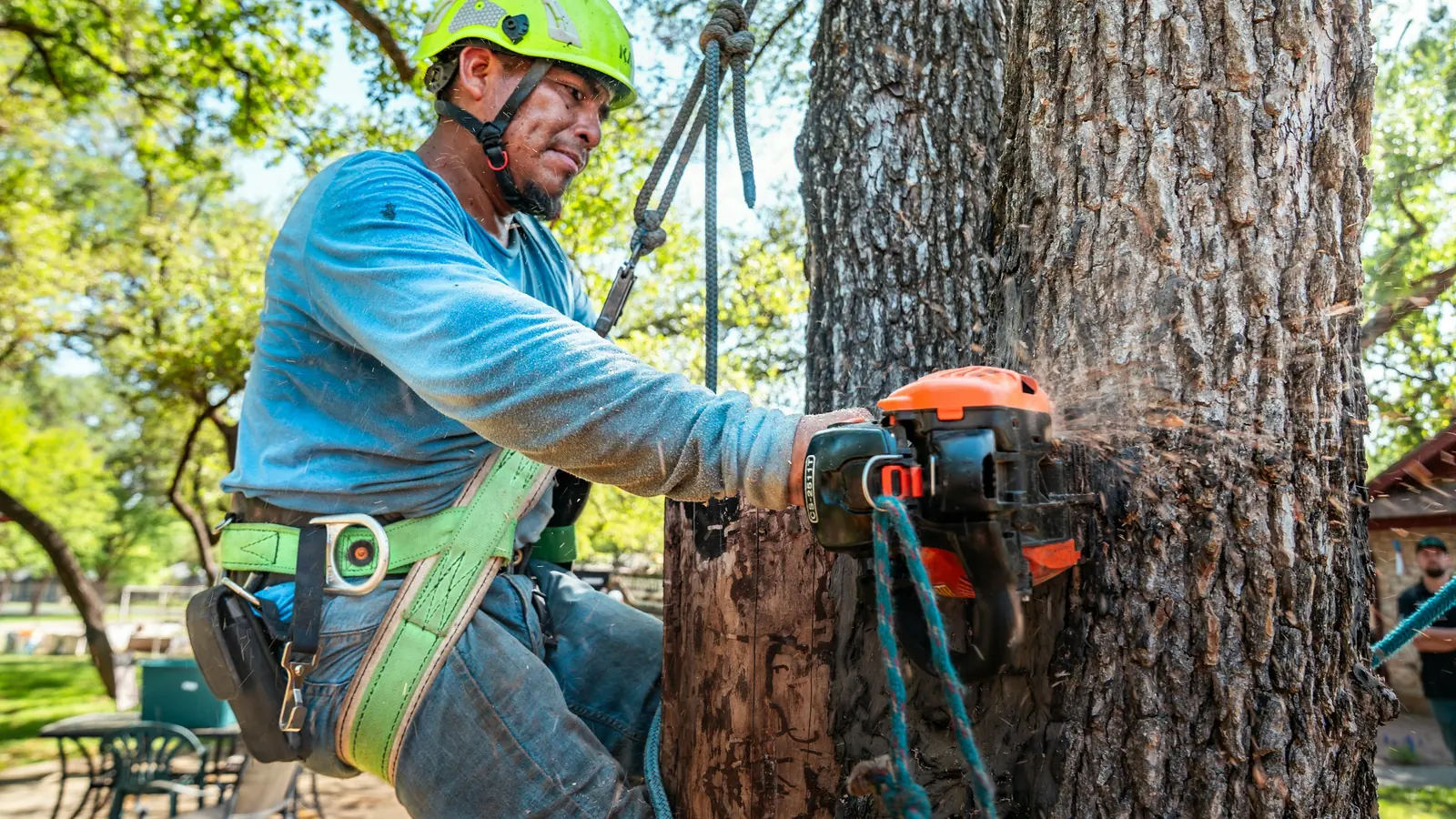
Lux Landscaping Construction takes trees down in sections from a rope-and-harness climb when the drop zone is tight, fells them in one piece when there is genuinely room, and rigs limbs and trunk wood down on ropes when a roof, fence, garden bed or paver patio sits underneath. We protect what is below the work, clear the wood, and leave the ground raked.
Who this is for
- Dead trees, including the ash lost across this region to emerald ash borer
- Trees crowding a foundation, driveway, septic field, sewer line or service drop
- Storm-damaged trees leaning over a house, garage, or a neighbor's property
- Clearing for an addition, patio, pool, driveway, fence line or new planting plan
Scope
What the work covers
- Drop zone, lean, access and overhead review before the first cut
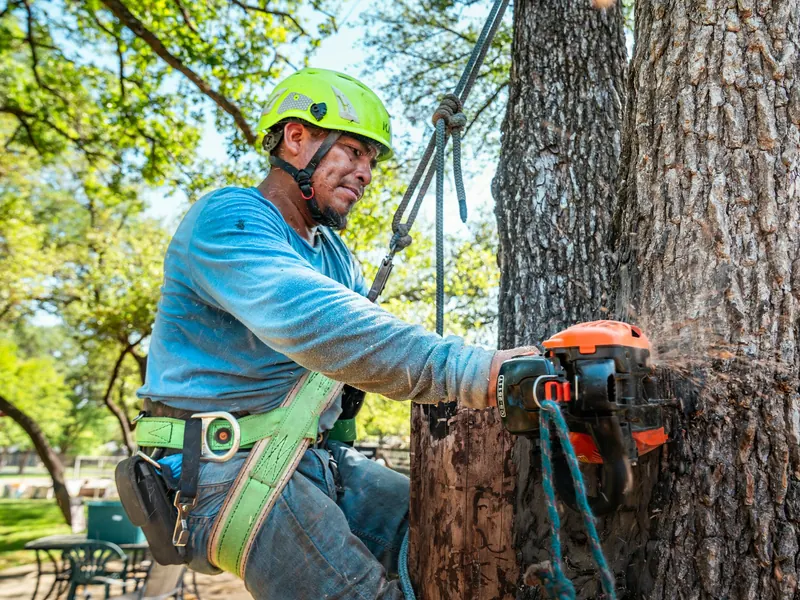
- Sectional dismantling from a climb where there is no room to fell the tree whole
- Controlled felling with ropes and wedges where the drop zone is clear and the wood is sound
- Rigging to lower limbs and trunk sections over roofs, fences, beds and paving
- Brittle dead trees taken down from outside the canopy or with equipment rather than climbed
- Trunk cut flush to grade, or left at a stump height you choose
- Limbs chipped, trunk wood cut into rounds, brush hauled, lawn and hard surfaces raked and blown clean
Options
What you can choose
Sectional dismantling
The default in a developed yard. A climber works up the tree, takes the limbs off in pieces small enough to control, and then steps the trunk down in rounds. Nothing larger than the available landing zone ever leaves the tree uncontrolled. It takes longer than felling and it is what allows a large tree to come out of a space eight feet from a house.
Felling in one piece
If there is open ground long enough for the whole tree and the trunk is sound, felling is faster, safer and cheaper. We use a hinge, wedges and a pull line to set the direction rather than relying on the lean. On an open back lot this is often the right call, and we will tell you when it is.
Removal from outside the canopy
Where the wood cannot be trusted — a long-dead ash, a split union, a storm-loaded trunk — we work from outside the structure with equipment instead of putting a climber in it. This usually needs a route in for a machine, so access is part of the conversation at the walkthrough rather than a surprise on the day.
What is left behind
A removal leaves a stump unless grinding is included. Grinding is a separate operation with its own locate requirement, and it can be done on the same visit or later. Tell us at the walkthrough whether you want the stump gone, the rounds kept for firewood, or the chips left as mulch, and it goes on the estimate as a line you can see.
How we do it
The sequence on site
Walkthrough: drop zone, access and lean
We look at what is under the tree, what is overhead, how the trunk and unions look from the ground, which side the weight sits on, and how a truck and chipper get in. That determines whether the tree is climbed, felled or taken from outside the canopy, and the estimate reflects the method.
Permits, parkway approval and the utility call
If the tree is in the parkway or your town regulates removals at that size, the approval comes before the schedule. If the canopy is into primary power lines, the utility handles clearance around energized conductors, and we will point you there first.
Protect the site and set the rigging
Vehicles out, furniture moved, beds and paving covered, mats or plywood down on the access route. Climbing and rigging lines are installed and tested before any load goes on them, and the work area is kept clear of people for the duration.
Take the tree down in order
Limbs first, from the top, then the trunk in rounds sized to what can be handled on the ground. Pieces over anything vulnerable are tied in, cut and lowered rather than dropped. The ground crew clears the landing zone between pieces so nothing stacks up under the cut.
Clear the wood and walk the site
Brush chipped, rounds stacked or loaded, lawn raked, drive and walks blown off. Then a walk around with you to confirm the stump height is what you asked for and that nothing was missed.
Local conditions
What northern Illinois changes about this job
Parkway trees are usually the town's call
The tree between your sidewalk and the curb is normally on municipal property. Removing it generally requires the village or city forestry department's approval, and many towns around Aurora remove and replace their own parkway trees rather than letting a private crew do it. We confirm ownership before quoting, because rules differ by town and quoting a tree that is not yours wastes everyone's time.
Removal permits and wooded lots
Some communities in the area require a permit to remove a tree over a certain trunk diameter, and some apply extra rules to wooded lots or to trees in a recorded conservation or landscape easement. Thresholds, fees and replacement planting requirements vary, so we check the current ordinance for your address rather than quoting a number from the next town over. If a formal condition report is required for an application, that comes from an independent certified arborist, not from us.
Dead ash get rigged, not climbed
Emerald ash borer has killed a very large number of ash across the western suburbs, and dead ash dry out and go brittle. The wood snaps without the warning a green tree gives, which is why a standing dead ash is taken down from outside the canopy or with equipment. If you have an ash that has been dead for a few seasons, it is harder, not easier, to remove than it was.
FAQ
Tree Removal questions
Do I need a permit to remove my tree?
Sometimes. It depends on your municipality, the size of the tree, and occasionally on the lot. Some towns regulate removals over a certain trunk diameter, some only regulate parkway and wooded-lot trees, and some do not regulate private yard trees at all. We check the rule for your address during the estimate and tell you what is required before anything is scheduled.
The tree is in the parkway. Who takes it out?
Usually the town. That strip is normally municipal property and many communities maintain and remove those trees themselves, often at no cost to the resident. Work there generally needs forestry department approval regardless of who does it. We confirm which it is for your address and point you to the right department if the tree is not ours to touch.
Will the lawn be wrecked?
Some marking is realistic, and we work to keep it to that. Plywood and mats spread wheel loads on the access route, landing zones are chosen off beds and soft ground, and large pieces are lowered rather than dropped. Frozen or dry ground takes equipment far better than saturated spring ground, so for a heavy removal in a tight yard, timing helps.
Is the stump included?
No. Removal leaves a stump at the height you ask for; grinding is a separate line on the estimate because it is a separate operation and needs a utility locate before it starts. You can have it ground on the same visit if the locate is already in hand, or schedule it later.
Can I keep the wood?
Yes. Trunk wood can be cut into rounds at a length you specify and stacked where you want it, and chips can be left as a pile for mulch instead of hauled. Say so at the walkthrough so the crew plans for it, rather than after the truck is loaded.
Free estimate
Ask about tree removal
Send the address and a short description. We will arrange a time to walk the site, then put the scope and the price in writing.