
Landscaping & Lawn Care
Landscaping & Lawn Care in Aurora, IL
Good landscaping in the western suburbs is decided below the surface. Much of the Fox Valley and DuPage County sits on heavy clay that drains slowly, holds water after a storm, and swells and shrinks as it wets and dries. Plant into it without loosening and amending it and roots circle in the hole like a pot. Lay sod over a low spot and you have a soft patch that stays wet all spring.
So we start with water and soil, then plant. Lux Landscaping Construction grades the yard so runoff leaves the house, gets downspout water away from the foundation, opens and amends the soil in the beds, and chooses plants that tolerate clay, winter wind and salt spray near the drive. Lawns go in on prepared, fine-graded soil rather than on whatever the builder left behind. We also offer recurring lawn care and maintenance through the season.
Every project starts with a walkthrough of the actual yard and ends with a written scope and price before anyone digs. Estimates are free. If the work makes more sense in phases, the estimate says what belongs in each one so you can decide the order.
What's included
Everything inside landscaping & lawn care
Design and planting plans
We measure the yard, note sun, shade, slope and sight lines from the windows you use, and lay out beds and planting to suit them. Plans can be a simple bed layout and plant list or a drawn plan for a whole yard. Either way you get a plant-by-plant list, so what arrives on install day is what you agreed to.
Planting
Trees, shrubs, evergreens, perennials and ornamental grasses, set at the right depth with the root flare visible and the hole widened rather than deepened. We choose species that handle clay, open wind and the reflected heat off pavement. Spring and early fall are the strongest planting windows in northern Illinois.
Lawns and sod
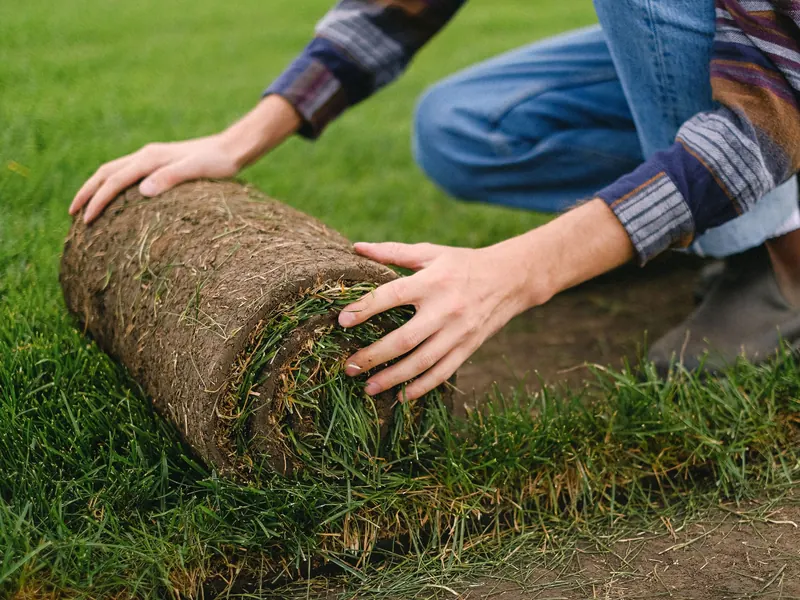
New lawns, lawn repairs and full replacements. Rough grade, topsoil, fine grade, then sod laid tight with staggered seams and rolled into contact with the soil. We set the finished turf height so it meets walks and patios cleanly instead of standing proud of them.
Beds, mulch and decorative rock
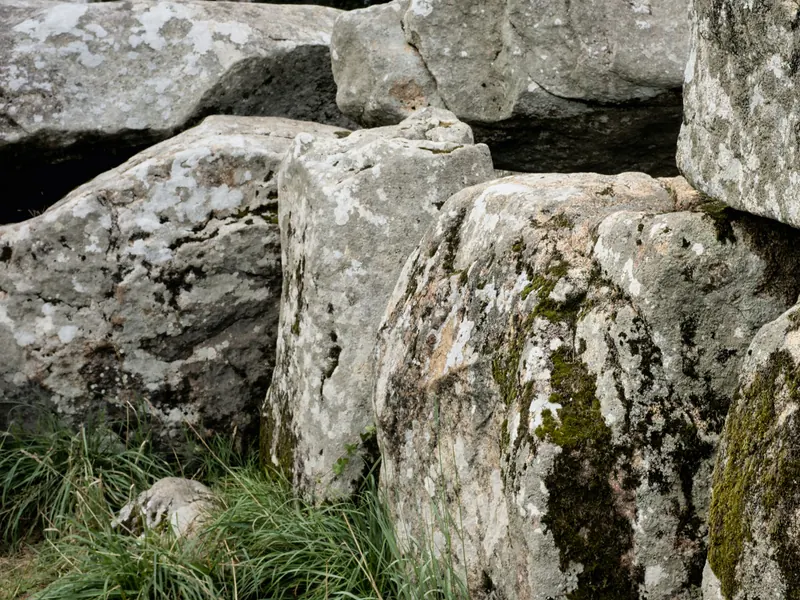
Bed shaping and cut edges, shredded hardwood mulch, river rock and decorative stone, boulder placement and steel or stone edging. Depth matters more than brand: enough mulch to hold moisture and shade out weed seed, not so much that it piles against trunks and stems.
Grading and drainage
Positive slope away from the house, swales to move surface water, downspout extensions, French drains and dry wells. Drainage is planned around where the water will actually end up, which on a tight suburban lot is the whole problem worth solving.
Soil work and bed renovation
Stripping tired beds, breaking up compacted subsoil, blending compost and topsoil, and resetting edges. Older beds in this area are often two inches of mulch over hardpan. Rebuilding the soil profile does more for plant health than replacing the plants.
Choose the job
Landscaping & Lawn Care pages, one per job
Each of these answers one question in full — scope, options, method, and the local conditions that change how it is built.
Landscape Design & Installation
Measured plans, plant selection and bed layout, installed in one pass or in phases.
Sod Installation
Soil prep, fine grading, tight seams and rolling, with a clear first-season watering plan.
Mulch & Decorative Rock
Bed refreshes, river rock, boulders and edging, installed at the right depth.

Grading & Drainage
Positive slope, downspout runs, French drains and dry wells, planned around where the water goes.
How we build it
The sequence on site
Request
Tell us what you want to change and what bothers you about the yard now, by phone or through the form. Photos help, and so does knowing whether you are solving a problem, finishing a new build or working through a longer plan.
On-site walkthrough
We walk the property with you. We look at where water goes in a heavy rain, how the ground slopes toward or away from the house, what the soil is like under the turf, and what sun each bed actually gets. We also talk about what you want to spend time maintaining.
Written estimate
You get a written scope and price: materials, quantities, plant list, and what is and is not included. It is free, and it is specific enough to compare. If a job splits sensibly into phases, the estimate shows the phases separately.
Locates and site prep
Before any digging we have the public utilities marked through JULIE, the Illinois one-call service reached at 811. It is free and required. Permit rules differ by municipality, so we confirm what a given project needs with the local building department first.
Build and final walkthrough
Beds are cut, soil prepared, plants set, turf laid and surfaces cleaned down. Then we walk the finished yard with you, go through watering and first-season care, and deal with anything that is not right before we leave.
Northern Illinois
What this climate and this ground demand
Clay soils across the Fox Valley
Local subsoils are dense and slow to drain. Water perches in the planting hole, roots stay wet, and a dry August then cracks the same soil hard. We widen planting pits instead of digging deep ones, blend in organic matter, and keep heavy equipment off wet beds so we are not creating a pan under the work.
Freeze-thaw from November to April
The ground here heaves and settles repeatedly through the winter rather than staying frozen. Shallow-rooted perennials get pushed up, new plantings lose contact with the soil, and edging that was only pressed into place lifts. Mulch applied for winter and edging set below grade both help.
Salt and snow along drives and walks
Chlorides from de-icers run off into the first few feet of bed and lawn beside pavement, burning foliage and souring soil. We keep salt-sensitive plants back from those edges, choose tougher material where spray is unavoidable, and leave room for plowed and shoveled snow to be piled somewhere it will not crush a shrub.
Planting windows
Spring and early fall give new plants a cool, damp stretch to put out roots, and fall planting takes advantage of soil that is still warm. Summer installs are perfectly workable but need watering discipline. We will tell you plainly when waiting a few weeks gives a better result.
Materials & options
What you get to choose
Topsoil, compost and amendments
Screened topsoil for grading and lawn beds, compost blended into planting areas to open up clay and feed soil life. On new construction we often have to replace what was scraped off and compacted during the build before anything else makes sense.
Plant material
Shade and ornamental trees, evergreens for winter structure, flowering and foliage shrubs, perennials and native grasses. We lean on plants proven in this climate zone and in clay, and we mix bloom times so a bed has something going on from spring through hard frost.
Sod and seed
Cool-season sod for fast cover and a clean edge, seed where the area is large, shaded or awkward to sod. Sod gives you a usable lawn immediately; seed costs less and lets you match a shade or fescue mix to a difficult spot.
Mulch and decorative stone
Shredded hardwood mulch for most beds, dyed mulch where you want the color to hold, river rock and larger decorative stone where you want a surface that does not need topping up each year. Rock is permanent and heats up; mulch feeds the soil as it breaks down. Each has a place.
Edging and borders
A cut spade edge, steel or aluminum edging, or a paver or natural stone border. The harder the edge, the better it holds a line against mower wheels and freeze-thaw, and the more it keeps mulch out of the lawn and turf out of the bed.
Design ideas
Reference images
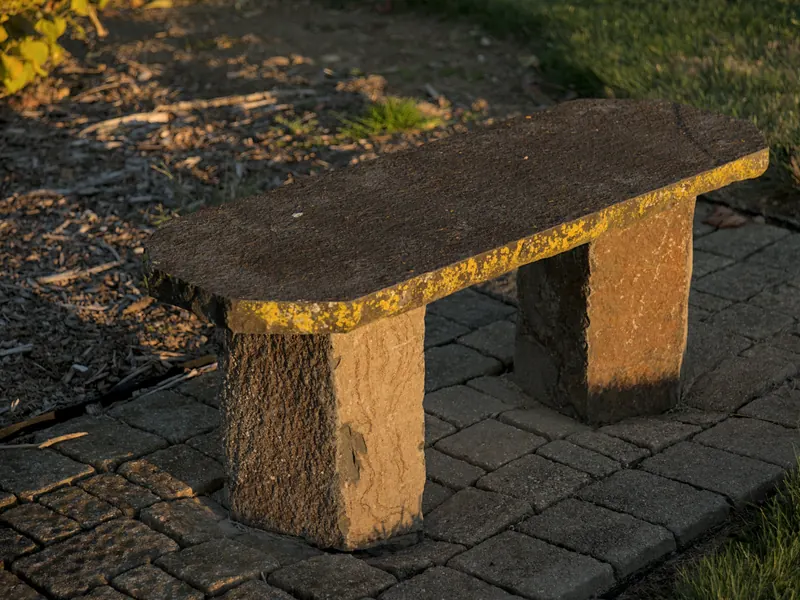
Sample inspiration photographs to help you describe what you want. These are not Lux Landscaping Construction projects.
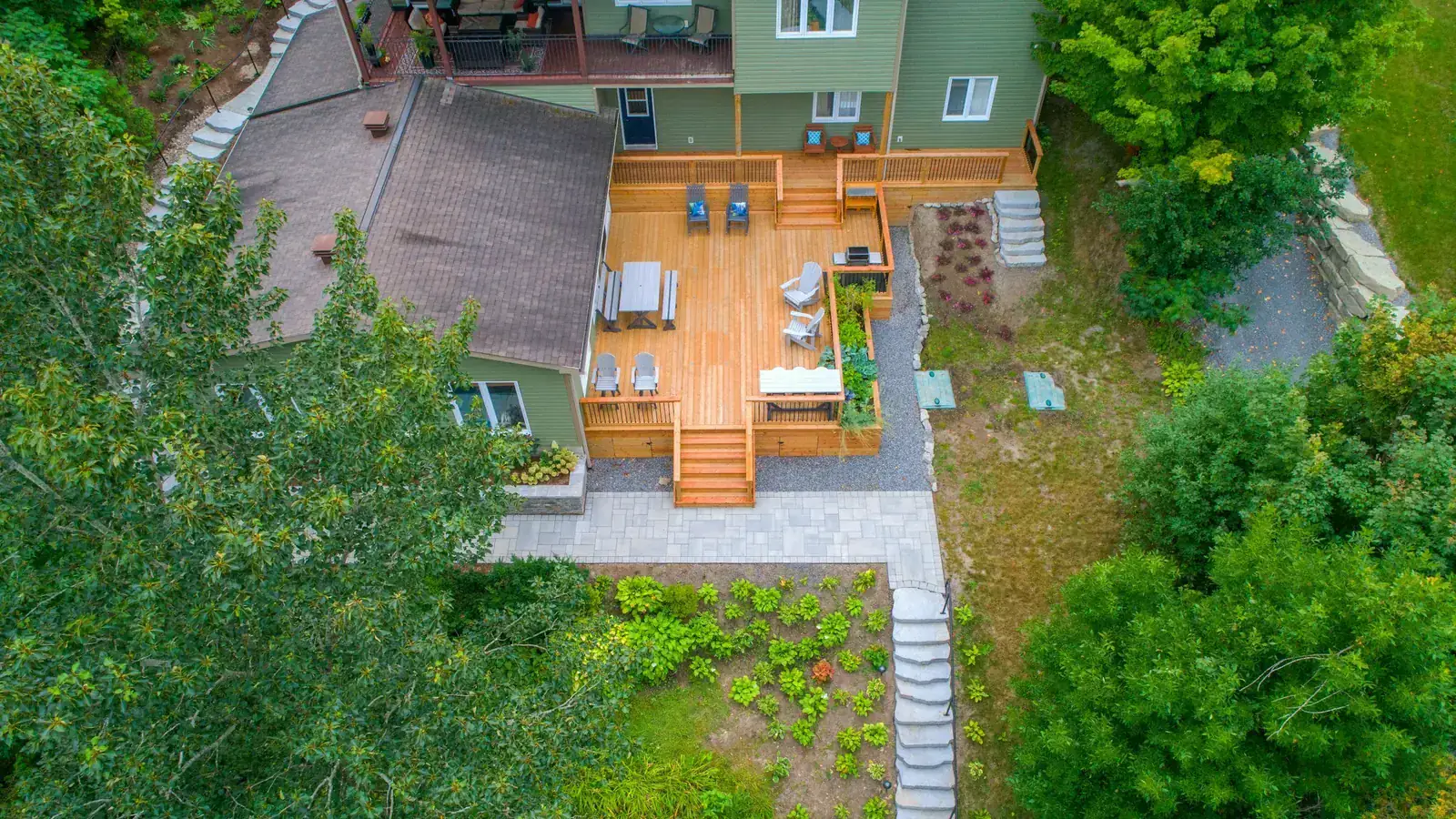
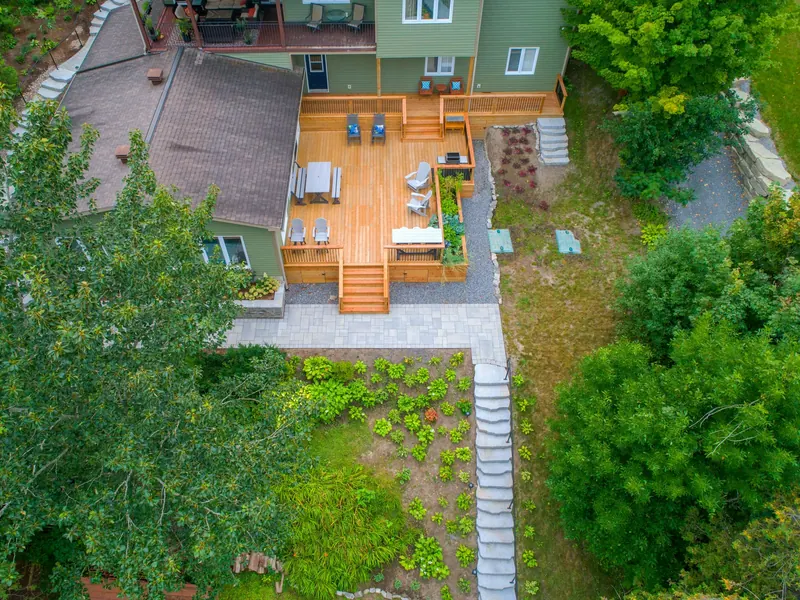
One heavy element anchors a planting bed better than several light ones. Boulders need to be set into the ground, not placed on it, to look native. Seen from above, a yard is a set of rooms connected by paths.
FAQ
Landscaping & Lawn Care questions
Do you charge for an estimate?
No. We walk the site with you and then send a written scope and price at no cost. Having the yard in front of us is the only way to judge soil, slope and access honestly, so we do not quote landscaping sight unseen.
Where should we start if the whole yard needs work?
Water first, then structure, then planting. Grading and drainage are the things that undo everything else if they are wrong, and they are hardest to retrofit once a patio and beds are in. After that, hardscape and bed layout set the shape, and plants fill it in.
Can the work be done in phases?
Yes, and on a full yard it often should be. We lay out the whole plan, then price it in stages that stand on their own, so each phase looks finished rather than half-built. Utilities, grading and anything that needs machine access are usually best done early.
What will the new planting need from us?
Water, mostly, and in the first season more than you would expect. New trees and shrubs want deep, infrequent soaking rather than a daily sprinkle, and clay soil means you water slowly so it soaks in instead of running off. We go through the specifics for your plants at the final walkthrough.
Do we need a permit for landscaping?
Plain planting and mulch usually not. Grading changes, retaining walls and anything structural can require one, and the rules are set town by town rather than countywide. We check with the building department that covers your address before work starts.
What areas do you cover?
We work out of Aurora and serve communities within roughly thirty miles, which covers the Fox Valley plus the Kane, Kendall, DuPage and Will County suburbs. If you are near the edge of that, ask and we will tell you straight whether we can take it on.
Areas served
Landscaping & Lawn Care across the Fox Valley
We travel from Aurora to communities within roughly 30 miles. Each town page sets out the jurisdiction and permit notes that apply there.
Other trades
The rest of what we do
Fences
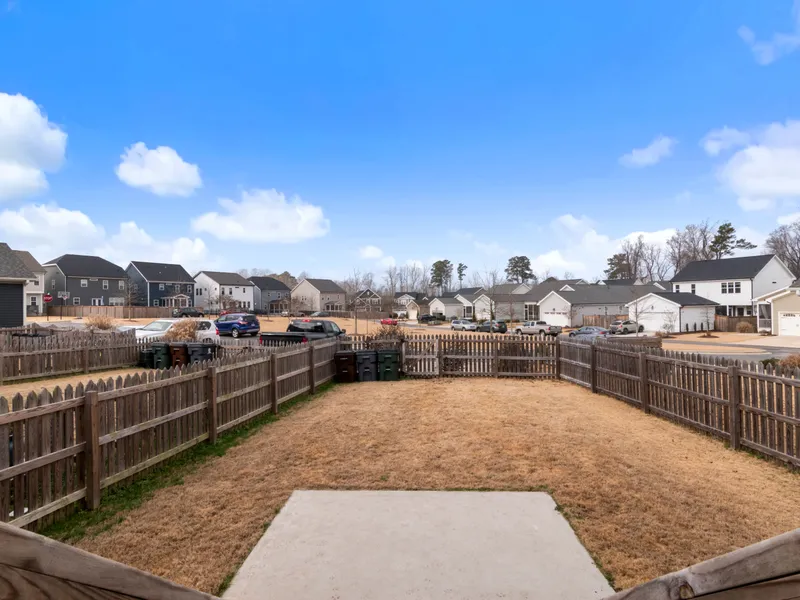
Wood, vinyl, aluminum and chain link fences for privacy, pets and pools. New installs, replacements and repairs, with post holes set below the frost line.
Explore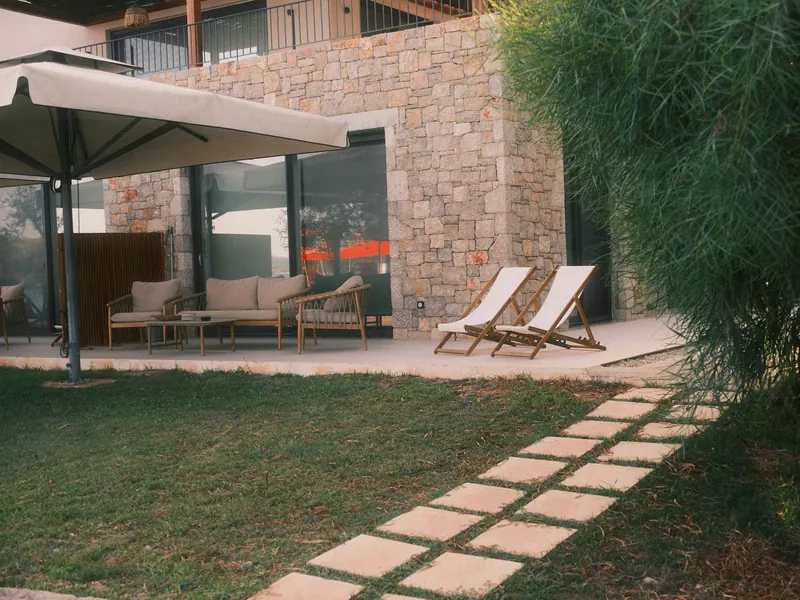
Hardscaping
Paver and brick patios, walkways, driveways, retaining and seat walls, fire pits, stone and curbing.
Explore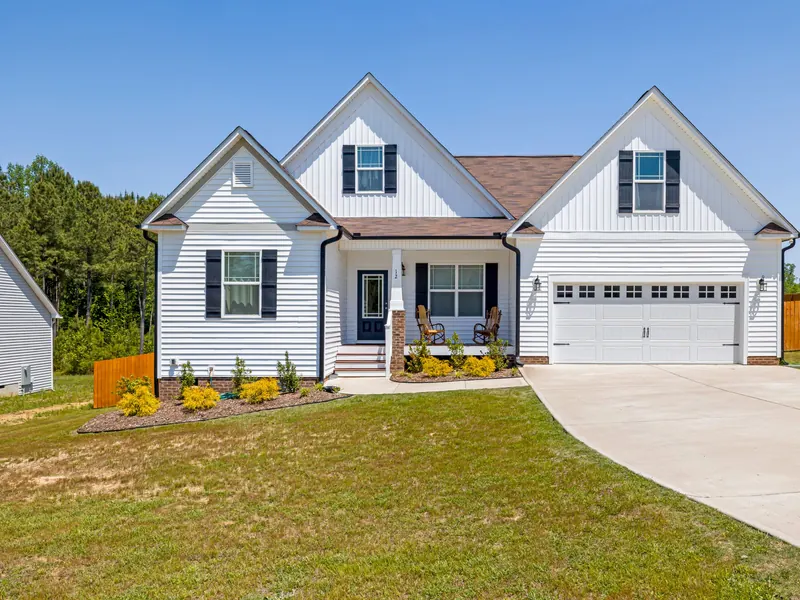
Concrete
Driveways, heated driveways, walkways, patios, stamped concrete, foundations and slabs.
Explore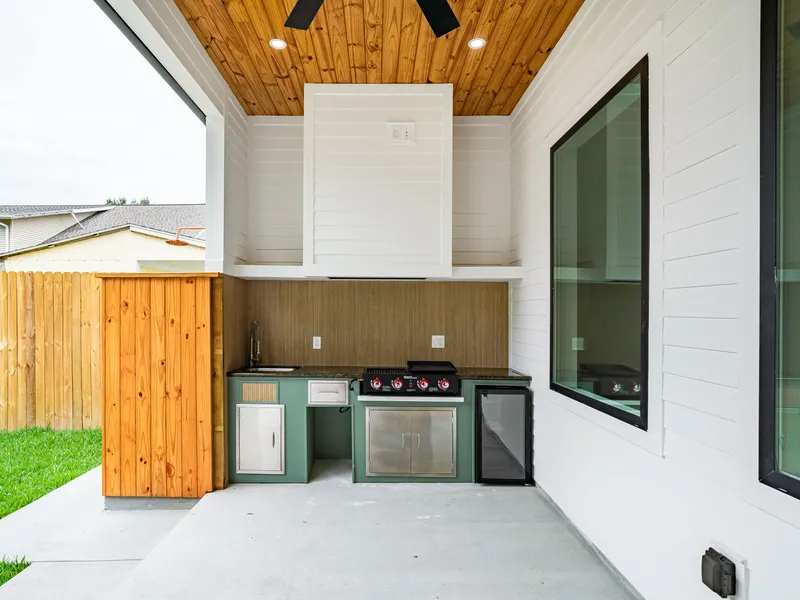
Outdoor Kitchens
Built-in grill islands, counters and bar seating on a paver or concrete base, designed to sit alongside your patio and fire pit.
Explore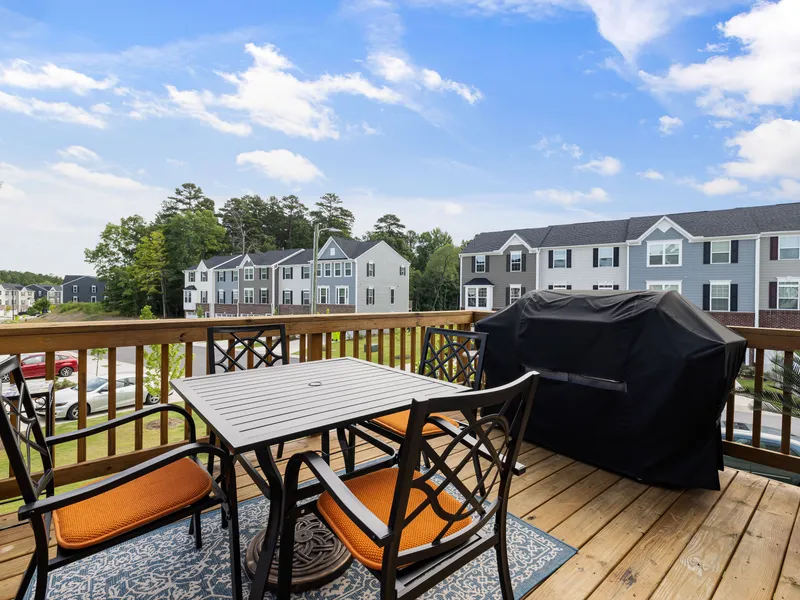
Porches & Decks
New decks and porches, plus repairs to boards, stairs and railings on the ones you already have.
Explore
Snow Removal
Seasonal snow plowing and removal contracts for driveways, walkways and small lots.
Explore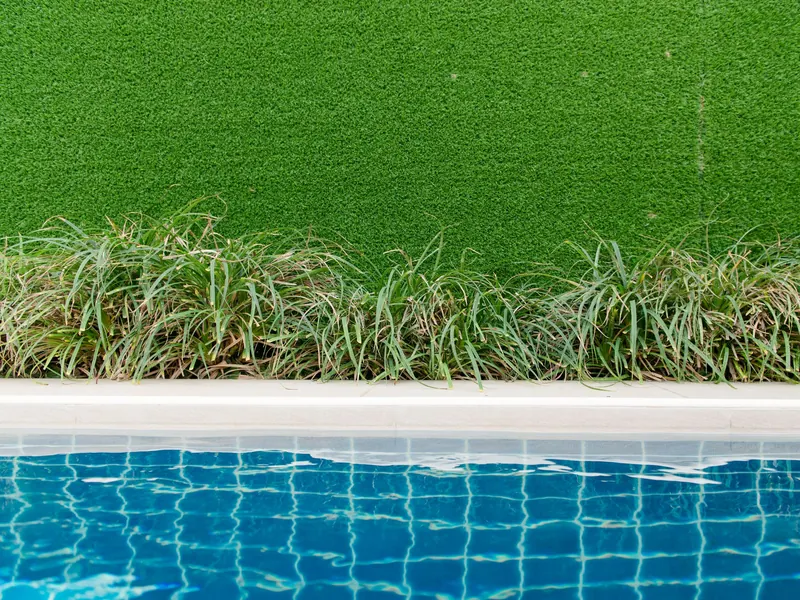
Artificial Turf
Lawn replacement, pet areas and putting surfaces, built on a drainage base that works in clay.
Explore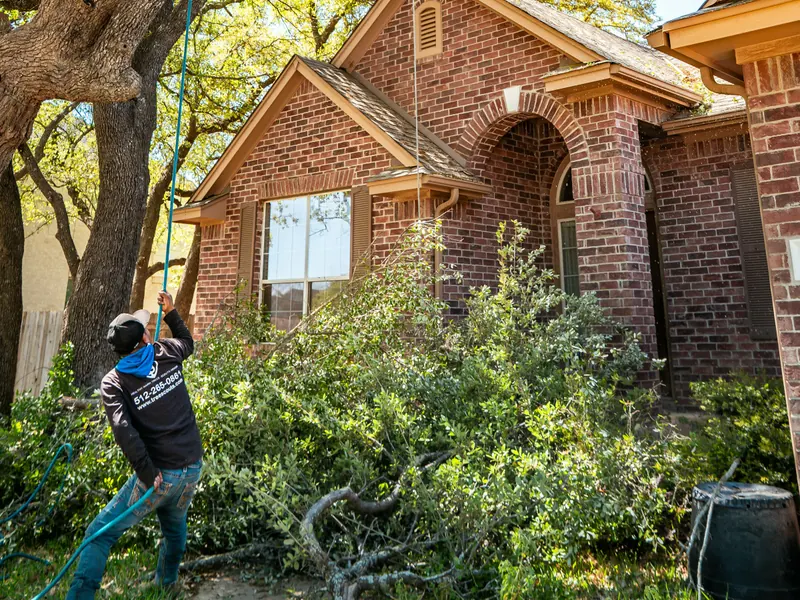
Tree Services
Trimming, pruning, removals, stump grinding and storm damage work, with the site cleaned up before we leave.
Explore
Aurora and communities within about 30 miles
Get a free estimate for landscaping & lawn care
Tell us what you have in mind and we will walk the site with you, then put the scope and the price in writing before anything starts.