
Landscaping & Lawn Care
Sod Installation in Aurora, IL
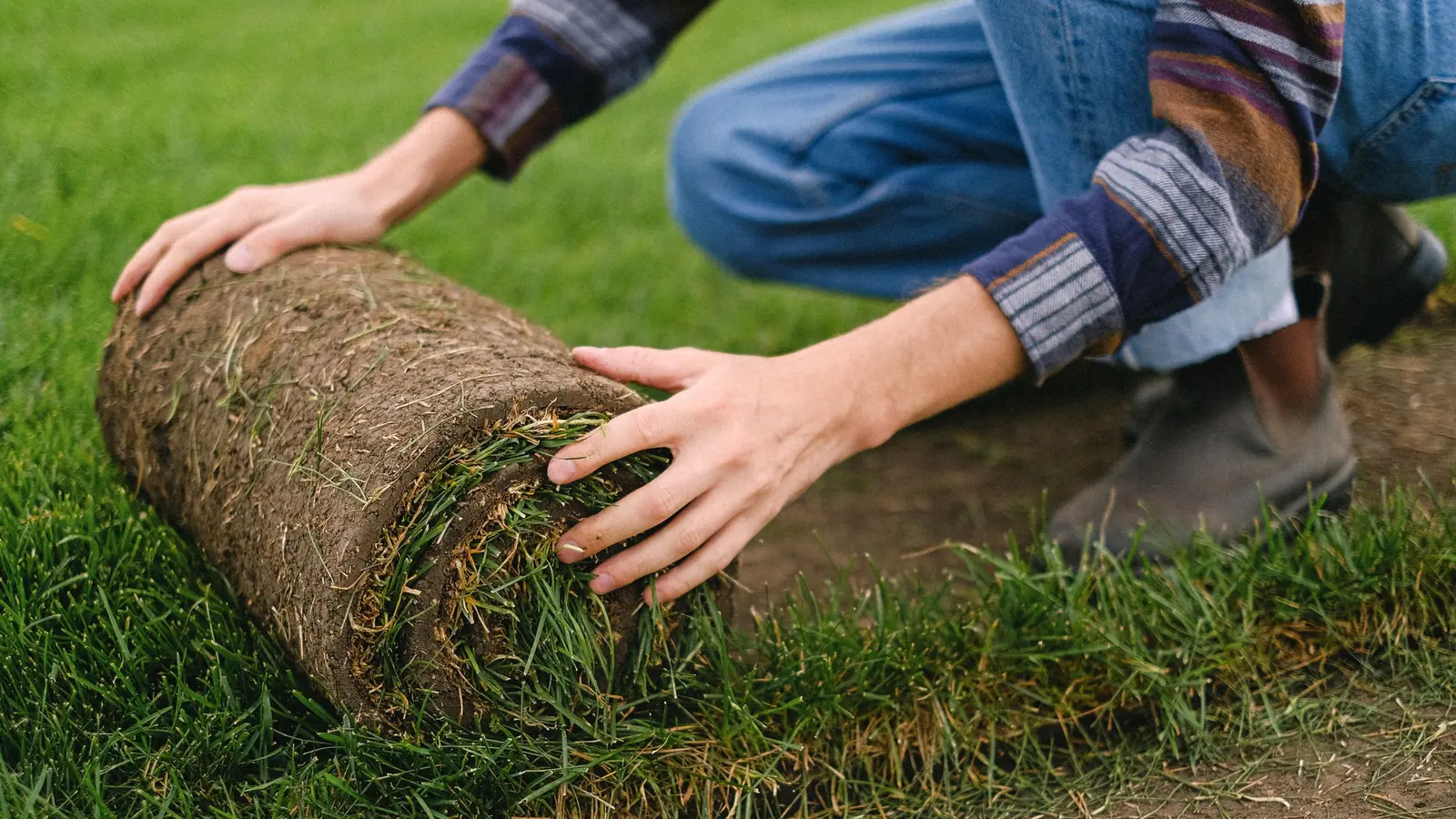
Sod gives you a finished lawn on the day it is laid, which is why it is the usual answer on new construction and on any yard where bare soil is about to wash. What decides whether it is still a good lawn next summer is everything that happens before the first roll comes off the pallet: what the soil underneath is, how evenly it has been graded, and how closely the sod is pressed into contact with it.
Lux Landscaping Construction preps the ground properly, lays tight, and hands you a watering plan you can actually follow. On most lots around Aurora that means dealing with compaction first. Builder traffic leaves clay subsoil packed hard with an inch or two of fines on top, and sod laid straight onto that roots into nothing.
Who this is for
- New builds and additions where the lot has been scraped, driven over and left bare.
- Lawns worn out by shade, grubs, drought or seasons of thin soil, where overseeding has stopped helping.
- Repair work after a patio, driveway, wall or drainage project disturbed the turf.
- Slopes and parkways where seed would wash out before it germinated.
Scope
What the work covers
- Removal or treatment of existing turf and weeds so the new sod is not competing from day one.
- Breaking up compacted subsoil, and imported screened topsoil where there is not enough to work with.
- Rough grading to set the slope, carrying surface water away from the house.
- Fine grading and raking to a smooth, firm, debris-free surface at the right height relative to walks, patios and drives.
- Starter fertilizer worked into the seedbed.
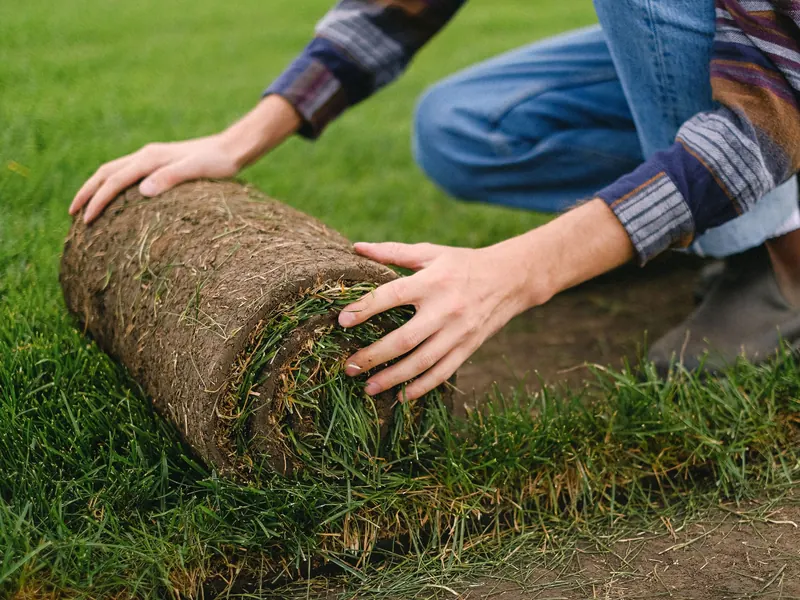
- Sod laid in staggered courses, seams butted tight, edges cut cleanly to beds and pavement.
- Rolling to press roots into the soil, a first deep watering, and a written watering schedule.
Options
What you can choose
Sod type
Kentucky bluegrass blends are the standard here: they knit together, repair themselves by spreading, and take full sun. Where there is real shade or heavy foot traffic, a fescue-containing mix holds up better. We match the mix to the light the area gets rather than sodding the whole yard with one thing.
Sod or seed
Sod is immediate, holds a slope and gives a weed-free start. Seed costs less per square foot, suits large open areas, and lets you use a mix tuned to shade. Seed also needs weeks of consistent moisture before it is usable. For small, visible or sloped areas, sod is usually the better value.
How much soil work
The honest range runs from a light till and rake where there is decent topsoil, through aerating and amending, to importing and spreading several inches of screened topsoil over a stripped lot. We will tell you which one your yard needs and what it costs, instead of quoting the cheapest and letting the lawn fail.
Watering
A new lawn needs water on a schedule, not when you remember. If you already have a system, we will tell you the coverage and frequency the new sod needs so you can set it. If you do not, we lay out a hose-and-sprinkler plan that reaches every panel, because dry edges show up as brown strips along walks within a week.
How we do it
The sequence on site
Clear and strip
Old turf, weeds and debris come off. Leaving dying grass under new sod traps a layer that holds water and blocks rooting. Stumps, construction spoil, and buried chunks of brick and mortar come out at this stage too.
Loosen and amend
Compacted ground is broken up so roots have somewhere to go, and topsoil or compost is blended in. On clay, the goal is a friable layer deep enough for turf roots, sitting on subsoil that has been opened rather than smeared.
Grade
Rough grade sets slope away from the foundation and toward whatever outlet the water is supposed to reach. Fine grade removes the dips that become wet spots and the high points a mower scalps. Finished soil is set below adjacent pavement by the thickness of the sod, so the turf ends up flush.
Lay
Sod goes down in staggered rows with seams butted tight and no overlap, laid across a slope rather than down it. Pieces are cut to fit beds, trees and curves with a knife rather than stretched. We work off boards on soft ground to avoid footprinting the seedbed.
Roll, water and hand over
Rolling presses the sod into the soil and removes air pockets, which is what lets roots cross the seam. The first watering is heavy, soaking through the sod into the soil beneath. Then you get the schedule and the first-mow guidance in writing.
Local conditions
What northern Illinois changes about this job
Construction compaction on clay
Nearly every new lot in the Fox Valley has been compacted by machine traffic on clay subsoil. Water will not move down through it and roots will not penetrate it. Breaking it up and adding real topsoil is not an upsell here, it is the difference between a lawn and a green mat that dies in the first dry August.
Heat and watering discipline
Sod laid in cool, damp weather establishes with little drama. Laid in July heat it needs water every day at first, then gradually less as roots knit into the soil below. If nobody is going to be there to water it, we would rather schedule it for cooler weather and say so.
Edges, mowers and winter
Turf that sits proud of a walk gets scalped by the mower and burned by reflected heat, and the exposed edge dries out and lifts over a freeze-thaw winter. Setting the grade so sod finishes level with pavement, and cutting a clean edge at beds, is a detail that pays for itself every season.
FAQ
Sod Installation questions
When can we walk on it and mow it?
Keep traffic off until the sod has rooted into the soil underneath; you can check by lifting a corner and feeling for resistance. The first mow waits until it is clearly growing and the ground is firm enough not to rut, with the mower set high and the blade sharp so it cuts rather than tears.
How much should we water?
Heavily and often at the start, so water passes through the sod into the soil beneath rather than wetting just the mat. As roots take hold you water less often and more deeply to pull them down. We give you a schedule for your lawn and the weather it goes in under.
Will the seams show?
For a while, yes. Tightly butted seams on a rolled lawn knit together as the grass spreads and become invisible. Gaps that open up are usually a watering problem: dry sod shrinks away from its neighbors, so the edges are where to look first if something seems wrong.
Can you sod over the existing lawn?
We do not recommend it. The old turf decomposes into a spongy layer that holds water, keeps new roots from reaching soil, and leaves the lawn soft underfoot. Stripping or killing what is there costs a little more and is the reason the new lawn lasts.
Free estimate
Ask about sod installation
Send the address and a short description. We will arrange a time to walk the site, then put the scope and the price in writing.